
 Communal Cleaning
 Exterior Cleaning
 Building Maintenance
 Specialist Services


Care home facilities management covers building repairs, heating, plumbing, electrical systems, fire safety, cleaning, grounds maintenance and planned servicing to keep premises safe, functional and suitable for residents and staff.
Care home facilities management keeps buildings safe and usable while staff focus on residents’ care. It goes beyond cleaning to heating, hot water, electrics, fire precautions, communal rooms and outdoor routes. In an occupied home, repairs need careful timing around residents’ routines. A clear plan helps managers address risks early, arrange servicing and record completed work consistently in one place.
Key Takeaways
- Keep an up-to-date register of building systems, equipment and their inspection and servicing dates.
- Report faults promptly and prioritise defects that could affect residents’ safety or essential services.
- Schedule maintenance around residents’ routines to minimise disruption to daily activities.
- Check building structures, heating, electrical systems, fire precautions, plumbing and outdoor access routes regularly.
- Record inspections, completed repairs, outstanding defects and contractor reports in an accessible maintenance log.
What Does Facilities Management Involve in a Care Home?
Facilities management looks after the physical environment and building services that allow a care home to operate safely. It includes:
- Arranging building repairs
- Maintaining heating and plumbing
- Coordinating electrical and fire safety checks
- Managing contractors
- Keeping maintenance records
It can also cover cleaning arrangements, communal spaces, waste facilities, gardens and external access routes.
Facilities management differs from resident care, which focuses on personal and clinical support, and housekeeping, which concentrates on everyday cleanliness. The teams often work together, particularly when maintenance affects occupied rooms or shared facilities.
The aim is to keep the property suitable for residents, support staff in their work and ensure building-related problems are identified, prioritised and resolved.
Why Is Regular Maintenance Important in Care Homes?
Regular maintenance helps protect residents from hazards and keeps essential facilities working. Loose flooring can increase the risk of falls, leaking pipes can damage rooms, and heating or hot-water failures can affect residents’ comfort and daily routines. Finding and repairing defects early can prevent these problems from becoming more serious or disrupting care.
The need to maintain suitable care settings is also important as the population ages. The Office for National Statistics projects that the number of people aged 85 and over in the UK will rise from 1.7 million in 2022 to 3.3 million by 2047. Although not everyone in this age group will need residential care, the projection highlights the importance of maintaining suitable buildings as care needs evolve.
Repairs must also be planned around occupancy.
DHSC figures recorded 86.4% of care-home beds in England as occupied in the week ending 15 September 2025. That level of occupancy means unexpected closures can disrupt residents and reduce the beds available for new admissions. Planned maintenance helps managers schedule work in advance and minimise avoidable disruption.
What Maintenance Does a Care Home Need?
A care home needs regular checks of its building fabric, essential services, safety systems and grounds. The work should reflect the property’s condition, residents’ needs and the risks identified during inspections.
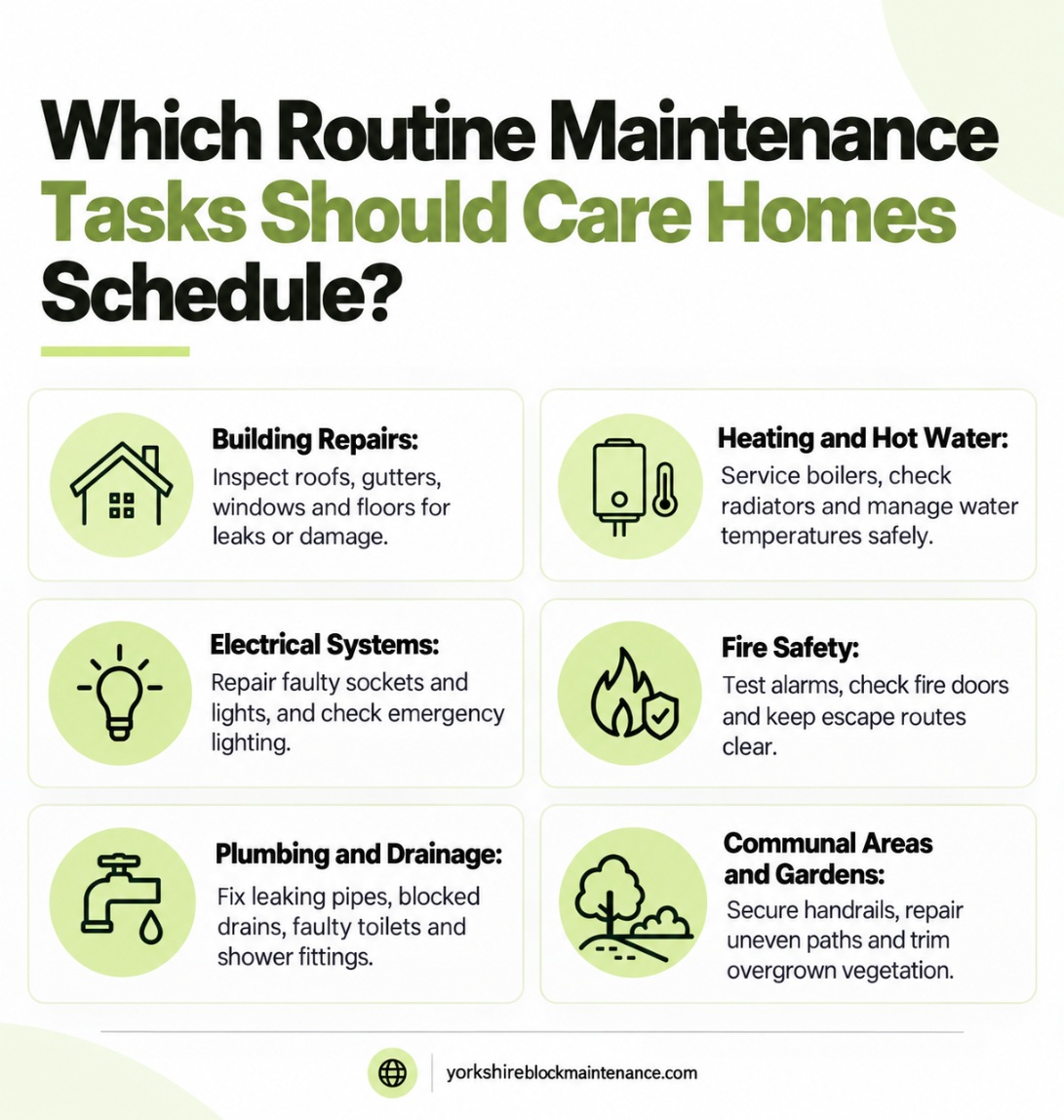
Building Repairs and General Property Maintenance
Inspect roofs, gutters, downpipes, windows, external doors, walls, ceilings and floors. Repair leaks, damp, cracked finishes and loose flooring before water damage spreads or walking routes become unsafe.
Heating and Hot Water Systems
Service boilers, check heating controls and repair faulty radiators to keep rooms comfortable. Water temperatures also need careful management to prevent Legionella growth without exposing vulnerable residents to scalding.
The HSE’s Legionella guidance for health and social care settings explains how to assess water-system risks and apply controls. Where temperature is used to control Legionella, it specifies hot water storage above 60°C and distribution above 50°C, alongside appropriate scald-risk controls.
Electrical Maintenance
Repair faulty lights, damaged sockets and electrical faults promptly. Check emergency lighting and arrange required electrical inspections so defects are identified and unsafe equipment can be taken out of use.
Fire Safety Systems
Maintain fire alarms, fire doors, emergency lighting, signage and escape routes so staff can respond to a fire and help residents reach safety. The Home Office’s fire safety risk assessment guidance for residential care premises sets out the fire precautions that responsible persons must assess and manage in care homes where residents may be unable to evacuate without assistance.
This makes routine checks and prompt repairs essential to keeping the home’s fire precautions suitable for its residents and evacuation arrangements.
Plumbing and Drainage
Check for leaking pipes, blocked drains, faulty toilets, damaged taps and shower problems. Reporting these early helps prevent water damage, hygiene issues and loss of essential bathroom facilities.
Communal Areas and Outdoor Spaces
Keep corridors, lounges, dining rooms, shared bathrooms, gardens and external pathways in good condition. Secure handrails, even surfaces, suitable lighting and clear access routes help residents move around more safely.
Dementia-Friendly Landscaping and Outdoor Areas
Use simple pathways, secure boundaries, familiar planting, sensory features and accessible seating to make gardens easier to navigate. Regular grounds maintenance also helps prevent overgrown vegetation, confusing routes and unnecessary obstacles.
Planned Maintenance vs Emergency Repairs in Care Homes
Care homes need both planned preventative maintenance and a clear process for unexpected faults. Planned work is scheduled before problems develop, while reactive repairs address defects after they appear.
What Is Planned Preventative Maintenance?
Planned preventative maintenance uses inspection dates, servicing schedules and asset registers to identify problems early. Managers record defects, assign responsibility and monitor outstanding work instead of relying on faults being noticed by chance.
Our planned and reactive building maintenance service supports this approach through scheduled property maintenance, roof and gutter repairs, plumbing, drainage and general building repairs.
What Counts as Reactive Maintenance?
Reactive maintenance responds to unexpected problems such as boiler breakdowns, burst pipes, electrical faults, damaged doors and blocked drains. Staff should report faults promptly so managers can assess the risk, arrange repairs and protect residents while the issue remains unresolved.
Why Should Care Homes Prioritise Planned Maintenance?
Planned maintenance makes spending easier to forecast, gives contractors time to arrange access and reduces the likelihood of avoidable breakdowns. It also helps managers track outstanding work and schedule repairs around residents’ routines, rather than dealing with every fault as an emergency.
What Are the Most Common Maintenance Problems in Care Homes?
Common problems include:
- Heating or hot water failures
- Bathroom leaks and blocked drains
- Damaged flooring and trip hazards
- Faulty lighting
- Defective fire doors
- Roof leaks and damp
- Worn fixtures
Staff should report defects as soon as they notice them, giving the location, nature of the problem and any immediate risk to residents. Managers can then assess urgency, arrange temporary safeguards where needed and commission repairs.
Prompt action limits further damage and helps prevent a minor fault from disrupting essential facilities or making an occupied room unusable.
Care Home Facilities Management and CQC Requirements
In England, Regulation 15 of the Health and Social Care Act 2008 (Regulated Activities) Regulations 2014 requires premises and equipment used by a care provider to be clean, secure, suitable for their purpose and properly maintained. The Care Quality Commission’s Regulation 15 guidance explains that providers must arrange appropriate maintenance, renewal and replacement of buildings and equipment.
This matters because outsourcing repairs does not transfer the provider’s legal responsibility. CQC confirms that the provider remains accountable for meeting the regulation even when contractors carry out the work.
Regulation 12 requires providers to:
- Assess potential risks
- Identify safety concerns
- Put appropriate controls in place
- Manage risks to health and safety
Facilities managers should therefore ensure relevant inspections, risk assessments, servicing records, defect reports and corrective actions are documented and available when needed. Fire safety and water hygiene require their own risk assessments and control arrangements; a general maintenance schedule cannot replace them. Care homes elsewhere in the UK must also follow the regulatory requirements applicable in their nation.
Should Care Homes Manage Maintenance In-House or Use Contractors?
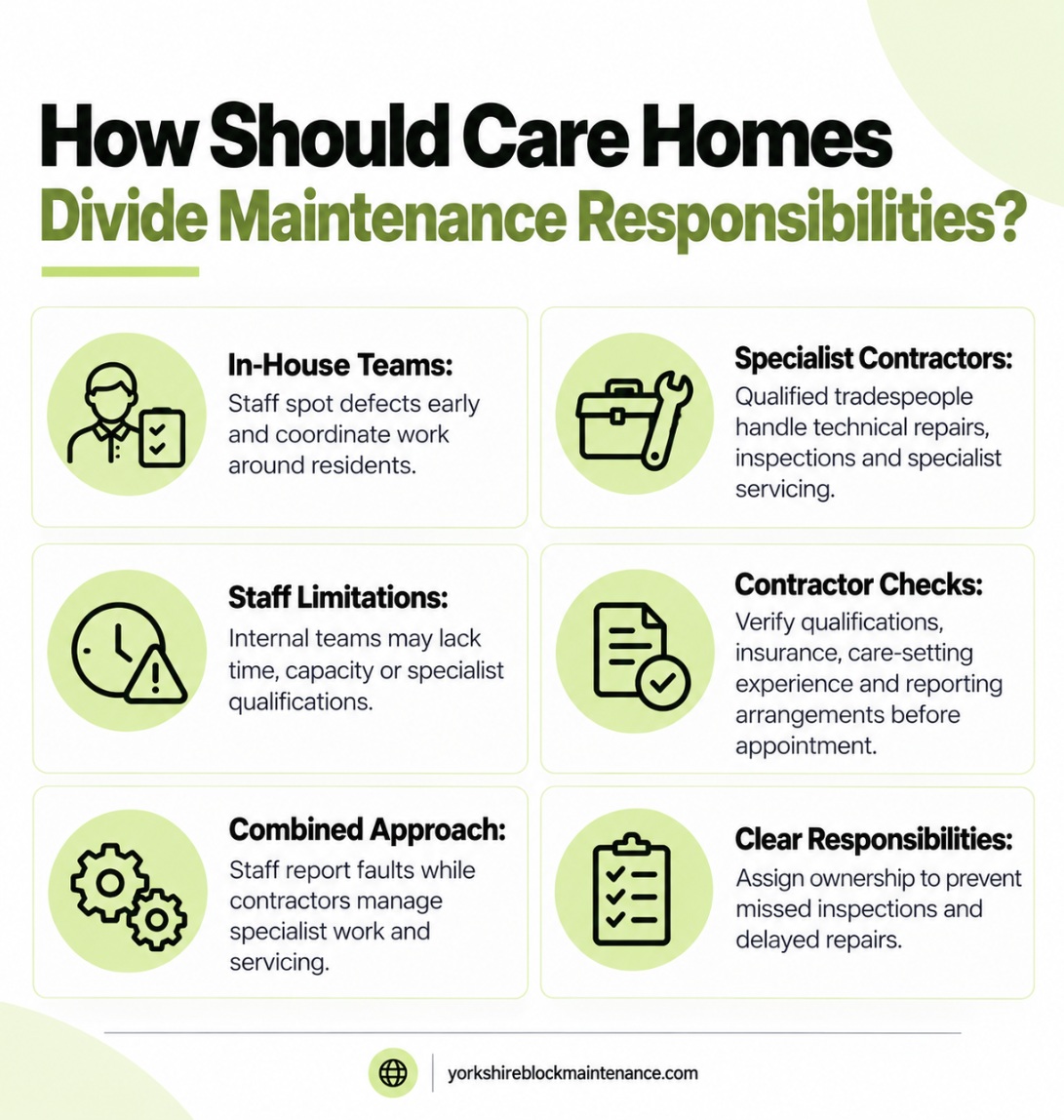
The right approach depends on the care home’s size, staffing, building condition and specialist maintenance needs. Some homes manage routine checks internally and bring in contractors for technical work, while others outsource more of the programme.
Managing Maintenance In-House
An internal team can spot everyday defects quickly, knows the building and can coordinate access around residents. However, staffing capacity and specialist qualifications may limit which inspections and repairs it can safely carry out.
Outsourcing Specialist Maintenance
External contractors provide access to qualified tradespeople, specialist testing and additional repair capacity. Managers should check relevant qualifications, insurance, care-setting experience and reporting arrangements before appointing them.
Using a Combined Maintenance Approach
A combined approach lets care staff report faults and internal teams monitor routine issues while contractors handle specialist repairs and servicing. Clear responsibilities help prevent missed inspections, duplicated work and delays in resolving defects.
How Much Does Care Home Property Maintenance Cost?
Care home maintenance costs depend on:
- The building’s age
- Size
- Condition
- Number of rooms
- Servicing requirements
- Labour rates
- And need for equipment replacement or refurbishment.
Frequent emergencies can also increase spending, so budgets should allow for planned work alongside unexpected faults.
Major improvements to reduce overheating may require a separate capital budget. A 2025 study by Ibbetson and colleagues modelled shading, increased thermal mass and air conditioning across three English care homes. It found that cost-effectiveness varied by building design, showing why heat-resilience work needs a property-specific assessment rather than a standard price assumption.
How You Can Choose a Care Home Maintenance Company
Choose a company with experience working in occupied care settings, suitable qualifications and insurance, and a clear process for urgent and planned repairs. Ask how contractors will work around residents, maintain safe access and coordinate noisy or disruptive tasks with care routines.
Check that the provider can supply written service reports, document defects, track outstanding repairs and provide relevant inspection or servicing records. Clarify emergency response arrangements, who authorises additional work and how progress will be communicated.
A written scope of work and agreed responsibilities help managers monitor the service and maintain a clear record of the property’s condition.
FAQs
What Does a Care Home Facilities Manager Do?
They coordinate building upkeep, contractor visits, safety checks, maintenance schedules and records to keep premises suitable for residents.
Who Is Responsible for Care Home Maintenance?
The registered care provider remains responsible for meeting applicable legal duties, even when external contractors complete the work.
How Often Should a Care Home Be Inspected?
Follow statutory requirements, manufacturer instructions and risk assessments, with inspection frequency adjusted to the property and its equipment.
What Is Planned Preventative Maintenance?
It schedules inspections and servicing before faults occur, helping managers identify defects early and reduce avoidable breakdowns.
Can a Care Home Outsource Building Maintenance?
Yes. External contractors can handle specialist repairs and inspections, while the care provider retains responsibility for safety and compliance.
How Does Property Maintenance Support CQC Compliance?
It helps keep premises clean, safe and suitable, with records showing inspections, reported faults, corrective work and servicing.
Conclusion
A well-maintained care home depends on safe buildings, reliable systems, accessible shared spaces and secure outdoor areas. Planned repairs and clear records help teams spot problems early, protect residents and keep everyday routines running while reducing avoidable disruption.
Need support with care home maintenance? Contact us today to discuss your property’s requirements and arrange a quote.