
 Communal Cleaning
  Exterior Cleaning
  Building Maintenance
  Specialist Services

Commercial property maintenance covers building fabric, fire safety, electrical systems, HVAC, water hygiene, cleaning and external areas. It combines statutory checks, planned maintenance and reactive repairs throughout commercial property portfolios.
For facilities managers asking “what does property maintenance include?”, the answer goes beyond repairs to roofs, walls, fire systems, electrics and water services. Planned checks also matter. So do statutory inspections and reactive repairs. The right programme depends on building use, equipment and risk. Deferring work can increase costs and leave defects to disrupt normal operations across managed commercial buildings.
Key Takeaways
- Property maintenance includes physical repairs and compliance work, from roof inspections and drainage to fire alarm and electrical testing.
- Planned preventive maintenance aims to catch defects early, reducing the chance of breakdowns, disruption and larger repair bills.
- Maintenance responsibility usually follows control of the area or system, while the lease can determine who pays for the work.
- Good records support ongoing compliance, particularly for systems such as Legionella management, lifts and asbestos.
What Is Commercial Property Maintenance?
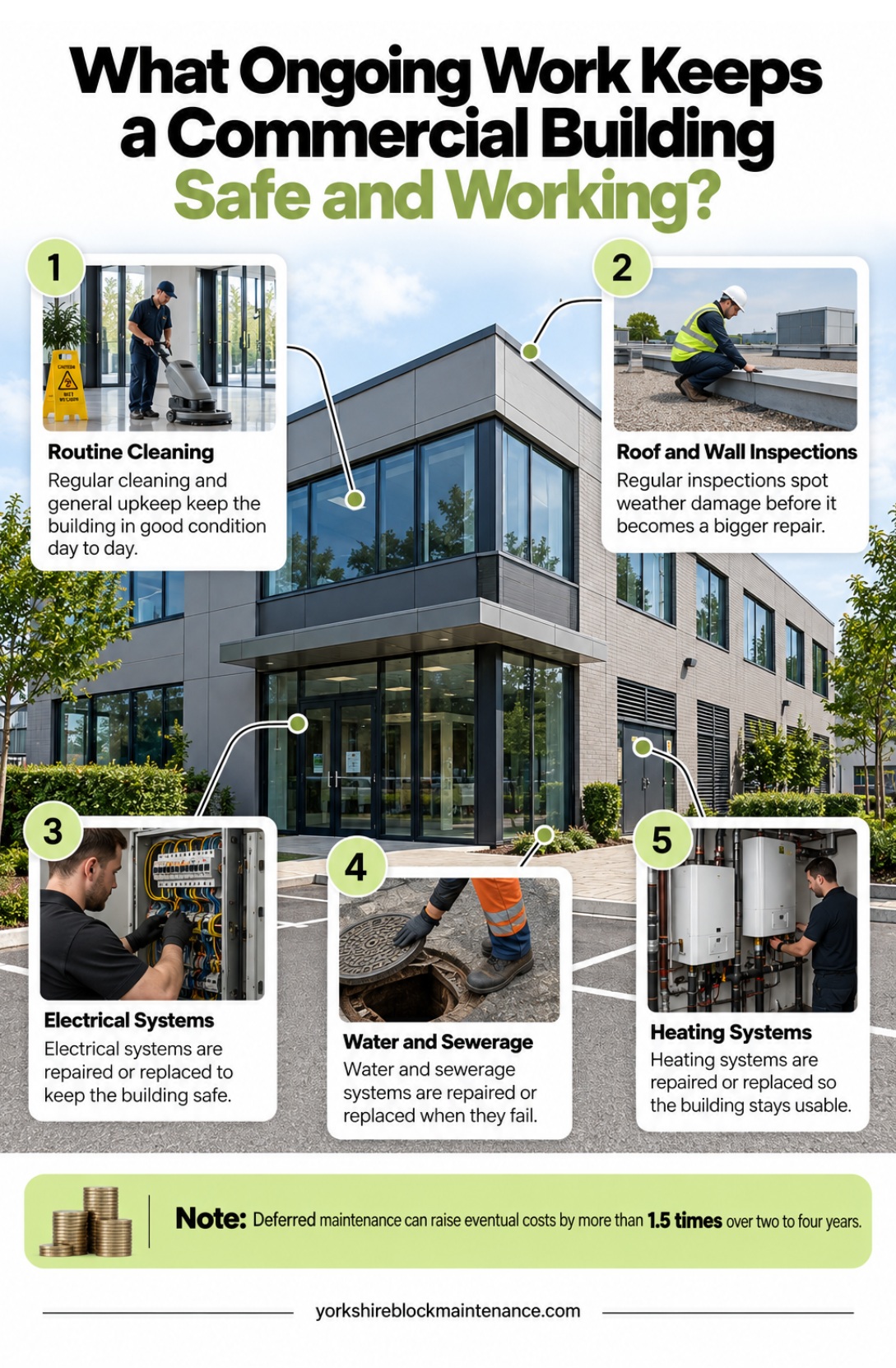
Commercial property maintenance covers the ongoing work needed to keep an existing building safe, functional and in good condition. This can include:
- Routine cleaning and general upkeep
- Roof and wall inspections
- Repairs and replacement of electrical systems
- Repairs and replacement of water and sewerage systems
- Repairs and replacement of heating systems
The National Audit Office report on maintaining public service facilities describes maintenance in similar terms. It also highlights what can happen when essential work is delayed, with issues ranging from water leaks and collapsing ceilings to faulty fire alarms.
Costs can rise too. The NAO cites a Cabinet Office estimate showing that deferred maintenance can increase eventual costs by more than 1.5 times over two to four years.
Regular maintenance helps keep these issues under control by identifying faults early and dealing with them before they cause greater disruption. It therefore forms an ongoing part of keeping a commercial property safe, usable and operational.
Which Types of Maintenance Apply to Commercial Buildings?
Commercial buildings need regular attention to keep their structure, systems and facilities in good working order. The type of maintenance required can vary depending on the task, the condition of the building and whether the work is planned or prompted by a problem.
Commercial buildings typically need three types of maintenance, depending on what needs attention and when. These fall into the following categories:
Statutory and Compliance Maintenance
Statutory maintenance covers inspections and tests required by law or specific regulations. Examples include fire safety checks, electrical inspections and lift examinations where the relevant rules apply.
Planned Preventive Maintenance (PPM)
PPM schedules inspections, servicing and routine work before a fault develops. SFG20 provides more than 1,500 maintenance schedules across 70 or more equipment types, giving facilities teams a structured basis for planned work.
Reactive and Corrective Maintenance
Reactive maintenance deals with faults after they occur. Corrective maintenance addresses defects identified during inspections or planned visits.
These tasks still form part of a managed maintenance programme. Our building maintenance service covers planned programmes and reactive repairs across commercial properties.
What Does Commercial Property Maintenance Include?
The scope can be broad because different parts of a building need different checks and maintenance tasks. Commercial property maintenance can cover almost every part of a building, from its structure and safety systems to water, heating, access and external areas.
The exact work will vary with the type, age and use of the property, with key areas including:
Building Fabric and Roofline
Building fabric and roofline maintenance covers the parts of the property that protect it from weather and everyday wear. This can include:
- Roof inspections and repairs
- Gutter clearance and downpipe maintenance
- Brickwork and masonry repairs
- Glazing and door maintenance
- Painting and plastering
Roof and gutter checks are good practice at least twice a year and after severe weather. The Met Office State of the UK Climate 2025 reports that the UK’s winter half year from 2016 to 2025 was 13% wetter than the 1961 to 1990 average.
That extra exposure to rain can increase the risk of leaks, blocked gutters and water getting into the building fabric. Regular inspections help spot these issues before they lead to more extensive repairs.
Drainage and Water Ingress
Drain unblocking, CCTV drain surveys and leak detection help identify problems before water causes wider building damage.
An annual survey can be a useful benchmark. More frequent checks may be needed around mature trees or heavily used drainage systems. Planned gutter clearance, roof inspection and drainage can keep these external and water-related tasks under one maintenance programme.
Fire Safety Systems
Fire safety maintenance helps keep the building’s alarms, escape routes and firefighting equipment ready to work when needed. Key tasks include:
- Fire alarm testing and servicing
- Emergency lighting checks
- Fire extinguisher inspections
- Fire door checks and maintenance
- Actions identified through the fire risk assessment
The fire and rescue incident statistics for England recorded 13,679 fires in buildings other than dwellings in the year ending March 2026.
Regular testing helps identify faults early and keeps essential fire safety measures in working order.
Electrical Testing (EICR and PAT)
Electrical maintenance can include fixed wiring inspections, EICRs, PAT testing, communal lighting and repairs. Commercial EICRs are commonly carried out at intervals of up to five years, though higher risk premises may need shorter periods.
PAT testing does not have one fixed legal interval. The frequency should reflect the equipment and risk.
HVAC, Gas and Lifts
Mechanical ventilation and air conditioning need regular cleaning, testing and maintenance. Passenger lifts require a thorough examination at least every six months under LOLER.
Air conditioning systems above 12kW also fall under the statutory inspection regime, while gas servicing and pressure system inspections need suitable specialists.
Water Hygiene and Legionella Management
Water hygiene maintenance helps keep commercial water systems safe and reduces the risk of Legionella. It can involve assessing the system, monitoring water temperatures, checking storage tanks and inspecting outlets. Regular checks also help identify conditions that could allow bacteria to grow.
External Areas and Grounds
Maintenance can include car parks, paving, grounds work and winter gritting. Seasonal checks help reduce slip risks from snow and ice and identify damaged surfaces before they become hazards.
Security and Access Systems
Door entry, CCTV, access control and external lighting need maintenance based on the relevant system specification. CCTV also needs to be managed under UK GDPR and the Data Protection Act 2018.
Who Is Responsible for Property Maintenance?
Responsibility usually follows who controls the relevant area, service or facility. In a commercial building, that could be the owner, landlord, managing agent or tenant depending on the arrangement.
A managing agent may control common areas while a tenant handles its own occupied space. The lease can then decide who pays for repairs and maintenance, even where statutory duties sit elsewhere.
Tenants also need to report defects and allow access for inspections or repairs where required.
Records matter too. Some regimes require specific evidence, such as Legionella records, lift examination reports and asbestos registers. Other maintenance records are not always legally mandatory, but written reports still help managers track defects, completed work and outstanding actions.
How Should Asbestos Be Managed in Older Buildings?
Older non-domestic buildings may contain asbestos in materials used during construction or later refurbishment. Where asbestos may be present, the duty to manage it requires appropriate records, a risk assessment, a management plan and clear information for anyone who may disturb the material.
The risks can remain for decades after exposure. The HSE work-related fatality statistics recorded 2,146 mesothelioma deaths in 2024, showing the serious consequences associated with asbestos exposure.
That is why asbestos information should be checked before drilling, cutting, removing finishes or carrying out other intrusive work. Where the material has not been properly assessed, the work should stop until the necessary checks have been completed.
When You Need a Specialist Contractor
You need a specialist contractor when the maintenance work involves significant risk, specialist equipment, regulated systems or technical knowledge beyond routine building upkeep.
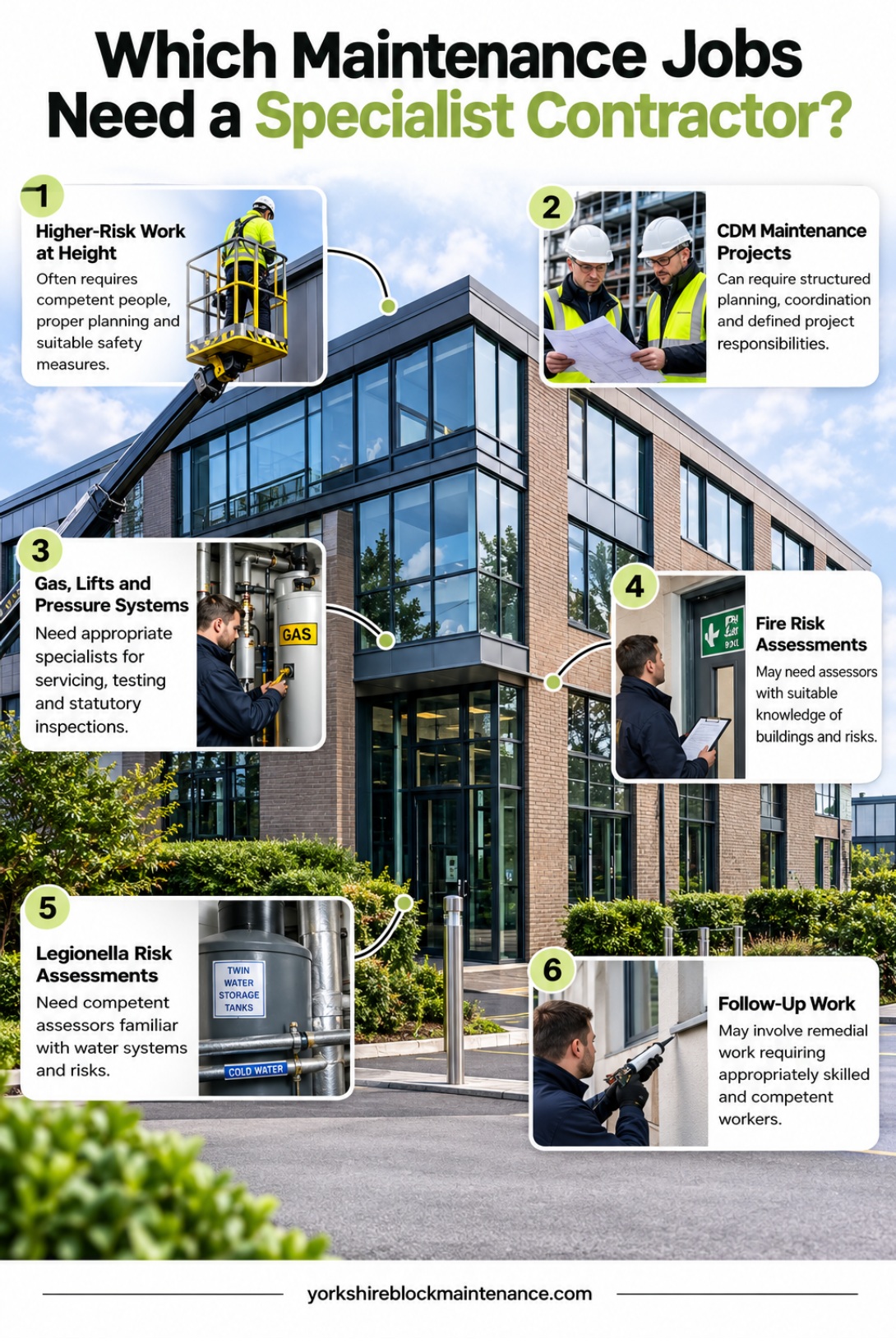
Work at height is one clear example, particularly where a fall could cause injury. Certain higher-risk maintenance activities can also bring duties under CDM 2015.
Specialist competence is also needed for gas servicing, lift examinations and pressure system inspections, where the relevant regulations set specific requirements.
The same applies to fire safety and Legionella management. Formal fire risk assessments and Legionella risk assessments need suitable knowledge of the building, system and associated risks. Any follow-up work should then be carried out by people with the right competence for the task.
Why Planned Maintenance Reduces Risk and Cost
Planned maintenance reduces risk and cost by helping property managers spot faults early. Problems can then be dealt with before they spread or cause disruption.
A blocked gutter, damaged roof or worn electrical component may seem minor at first. Left unchecked, each could lead to water damage, equipment failure or a more expensive repair.
Planning also makes the work easier to manage. Inspections, servicing and repairs can be arranged around the building’s normal use. This helps reduce disruption for staff, tenants, customers and visitors.
It also makes spending easier to control. Planned work can be prioritised and budgeted for in advance. Urgent failures can be far harder to prepare for.
Over time, regular maintenance helps protect the building, extend the life of its systems and keep essential services running properly.
FAQs
How often should fire alarms be tested in a commercial building?
For a UK commercial building, the fire alarm should be tested weekly, with six-monthly servicing and preventive maintenance by a competent person.
Who is responsible for maintaining communal areas in an apartment block?
Responsibility usually follows control of the communal area. The freeholder, managing agent or another party may hold the duty, depending on the arrangement.
Do all commercial buildings need an EICR?
Electrical systems need suitable inspection and maintenance. Commercial EICR intervals are commonly up to five years, but higher risk premises may need shorter periods.
How often should Legionella risk be reviewed?
There is no universal two year rule. The assessment should be reviewed regularly and whenever circumstances affecting the water system change.
What happens if maintenance is neglected?
Defects can become larger repairs, while equipment may fail and disrupt the building. Deferred maintenance can also increase eventual costs.
Conclusion
Commercial property maintenance includes statutory checks, planned preventive work and reactive repairs across building systems. Responsibility usually follows control of the relevant area, while leases may determine payment. A planned, documented approach helps reduce safety risks, prevent disruption and control long-term costs.
Get in touch for a free quote covering apartment blocks and commercial properties across Yorkshire.