
 Communal Cleaning
  Exterior Cleaning
  Building Maintenance
  Specialist Services

Planned maintenance generally saves landlords more money over time by preventing costly emergency repairs and disrepair claims. Reactive maintenance still makes sense for genuinely unpredictable, low-cost issues.
Landlords generally maintain rental properties in one of two ways. One approach fixes problems after they happen. The other relies on regular inspections and scheduled servicing to prevent them. Reactive vs planned maintenance has a direct impact on repair costs, emergency call-outs, and the long-term condition of your property, making the right balance essential.
Key Takeaways
- Reactive maintenance often costs significantly more per repair than planned, scheduled maintenance
- Planned maintenance helps landlords avoid disrepair claims and meet statutory repairing obligations
- A cost-effective strategy usually combines routine planned servicing with contingency for genuine emergencies
What Is Reactive Maintenance
Reactive maintenance means repairs happen only after something goes wrong. There are no scheduled inspections or routine servicing to prevent faults. Instead, action starts when a problem is noticed or reported.
Common examples include:
- Burst pipes
- Boiler breakdowns
- Blocked drains
- Broken locks.
The House of Commons Library’s research on housing conditions in the private rented sector explains that landlords have legal repair duties under Section 11 of the Landlord and Tenant Act 1985. These duties apply once a landlord has been notified of a qualifying defect. Reactive maintenance is essential for unexpected problems.
However, relying on it alone often leads to more emergency call-outs, higher repair costs and greater disruption for both landlords and tenants.
What Is Planned Maintenance
Planned maintenance, often called Planned Preventative Maintenance (PPM), takes a proactive approach. The aim is to spot small issues before they turn into expensive repairs. Regular inspections and routine servicing help keep the property in good condition throughout the year.
This reduces the risk of sudden breakdowns and costly emergency call outs.
The RICS Planned Preventative Maintenance professional standard describes PPM as a structured programme of inspections and maintenance that helps prevent failures before they develop into major defects. It also recommends planning maintenance over five to ten year cycles.
Typical tasks include:
- Annual boiler servicing
- Roof inspections
- Gutter clearing
- Communal area checks.
Every job is scheduled ahead of time, giving landlords greater control over repair costs and helping properties stay safe, compliant and well maintained.
Reactive vs Planned Maintenance (What’s the Difference)
Both approaches aim to keep a property in good repair, but the way they do it is completely different. One puts you in control of the timeline and the cost.
The other leaves both entirely in the hands of whatever breaks next.
| Feature | Reactive Maintenance | Planned Maintenance |
|---|---|---|
| Timing | After a fault occurs | Scheduled in advance |
| Cost per repair | Often higher | Generally lower |
| Predictability | Unpredictable | Budgeted and forecastable |
| Tenant impact | Higher disruption | Lower disruption |
| Legal exposure | Higher risk of disrepair claims | Lower risk with documented inspections |
Which Maintenance Strategy Saves Landlords More Money
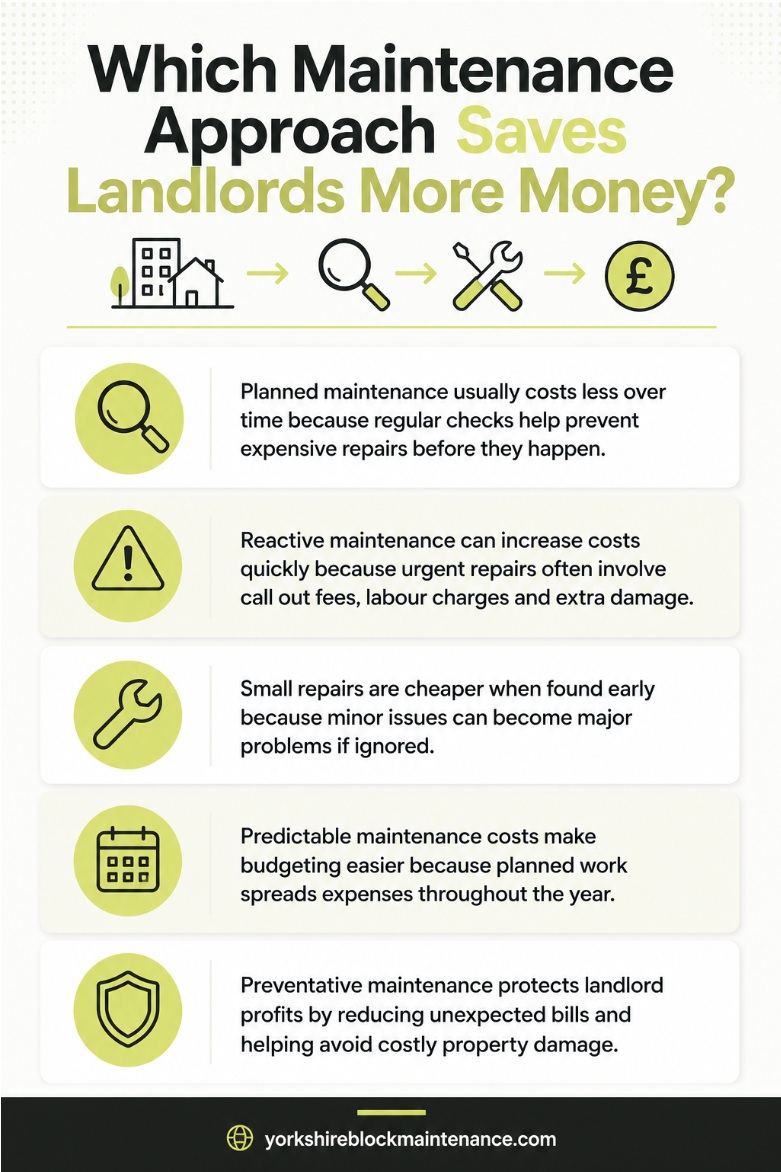
Reactive and planned maintenance both cost money, but they do not cost it in the same way. One relies on repairs after faults develop. The other spreads maintenance across regular inspections and servicing.
The difference becomes much clearer over time.
Short Term Costs
Reactive maintenance often appears cheaper at the beginning. There are no scheduled inspections, servicing costs or maintenance contracts. You only pay when something goes wrong. That can seem like a sensible way to save money.
Research published in the International Journal of Environmental Sciences found that emergency repairs in UK social housing can cost up to five times more than planned maintenance. This shows why preventative maintenance can help control repair costs and reduce the risk of expensive failures.
Emergency Repair Costs
Emergency repairs rarely stop at one bill. Call out charges, out of hours labour and temporary repairs all add to the final cost. A small problem can also become much more expensive if it is left unresolved.
A minor roof leak can turn into damp and water damage. A boiler without regular servicing is more likely to fail when demand is highest. Planned maintenance helps reduce the risk of these costly situations.
Planned Cost Control
Regular inspections help identify faults before they become major repairs. They also make maintenance costs easier to predict. Landlords can plan for routine work instead of dealing with unexpected repair bills throughout the year.
A clear maintenance schedule also supports better budgeting. Rather than facing large one off expenses, costs are spread more evenly across the year.
Long Term Financial Impact
Delaying maintenance can become very expensive.
According to the English Housing Survey 2023 to 2024, the average cost of bringing a non decent home up to the Decent Homes Standard was £10,975. The median cost was £5,397, while the median for private rented homes was £4,222.
These figures highlight the cost of deferred maintenance. Small issues are usually cheaper to fix early than after they develop into larger problems. Over time, planned maintenance helps protect both your property and your rental income.
Why Planned Maintenance Usually Costs Less
Planned maintenance spreads repair costs over time and deals with issues before they become major problems.
A loose roof tile found during an inspection is quick and inexpensive to replace. Leave it for a few months and rainwater can damage the roof structure, ceilings and walls.
The longer repairs are delayed, the higher the potential cost. Regular servicing also helps landlords understand what work is needed and when it should be completed. This leaves fewer opportunities for expensive surprises.
Early repairs cost less. Delayed repairs rarely do.
The Hidden Costs of Reactive Maintenance
The repair bill is only part of the cost. Reactive maintenance often leads to extra expenses that build up long before the job is finished.
This can include:
- Paying higher emergency call out charges, especially outside normal working hours
- Facing increased labour costs for evenings, weekends and bank holidays
- Dealing with water damage and damp caused by undetected leaks
- Losing rental income if a property becomes uninhabitable during repairs
- Receiving more tenant complaints, which can lead to higher turnover
- Spending more on repairs as smaller problems grow into larger ones
These costs can add up quickly. According to the BRE Trust, the average remedial cost of fixing a Category 1 HHSRS hazard in England is £3,780, while the total estimated cost of unaddressed housing disrepair stands at £9.8 billion.
When Is Reactive Maintenance the Right Choice
Reactive maintenance is not always the wrong call. There are situations where it makes complete sense, and pretending otherwise would not be honest.
For genuinely unpredictable failures, such as a lock breaking or a window being accidentally cracked, there is no practical way to prevent the issue through scheduled servicing. Reactive repair is the only sensible response.
Similarly, for low-cost minor issues that resolve quickly and cheaply, building a planned maintenance programme around them would cost more than it saves.
If a component is nearing the end of its useful life, replacing it outright is often more sensible than scheduling repeated servicing for something that will need replacing soon anyway.
The key is using reactive maintenance selectively, not as your entire strategy.
How to Create a Cost-Effective Planned Maintenance Strategy
A planned maintenance strategy is simply a schedule for looking after your property throughout the year. It sets out what needs checking, when it should happen and how repairs will be managed before they become emergencies.
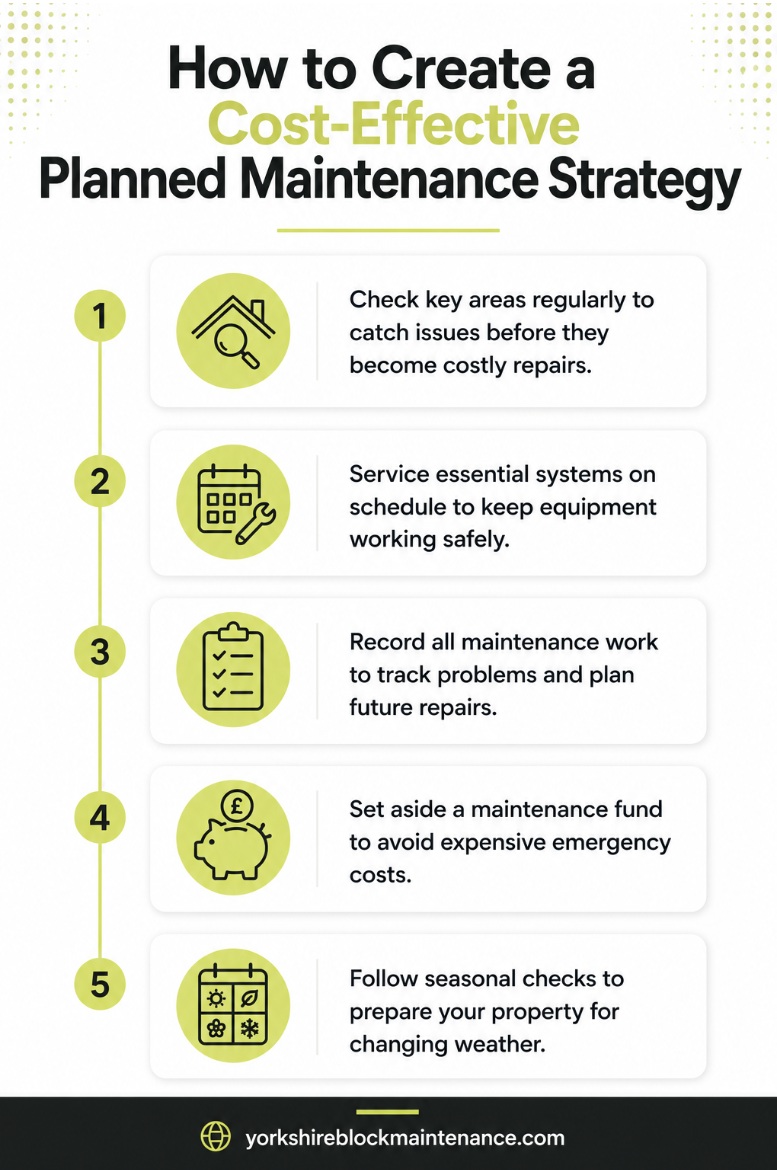
A clear plan also makes maintenance costs easier to budget for and helps reduce unexpected call outs.
Property Maintenance Throughout the Year
Property maintenance is easier to manage when tasks are planned around the seasons. A simple yearly schedule helps prevent small issues from becoming costly repairs.
This means:
- Inspecting the roof, gutters, external walls and drainage after winter during spring
- Carrying out exterior painting, roof repairs and damp or ventilation checks in summer
- Clearing gutters, servicing the boiler and checking window and door seals in autumn
- Focusing on heating systems, insulating exposed pipework and monitoring vacant properties during winter
Reactive vs Planned Maintenance for Different Property Types
The right balance between planned and reactive maintenance shifts depending on what kind of property you manage. Obligations and priorities vary, and what works for one landlord may not suit another.
According to private rented sector statistics from the ONS, roughly one in five UK households now rents privately, and regulatory standards differ significantly across England, Wales, Scotland, and Northern Ireland.
These differences make a tailored maintenance strategy even more important.
Buy to Let Properties
Buy to let properties usually benefit from a simple planned maintenance schedule. Annual servicing, routine inspections and clear maintenance records help landlords stay on top of repairs and reduce unexpected costs.
Houses in Multiple Occupation
HMOs have additional licensing and safety requirements. Landlords must keep up with annual gas safety checks, five yearly electrical inspections and regular fire safety maintenance.
Planned maintenance helps meet these legal obligations.
Blocks of Flats
Blocks of flats need regular maintenance in shared areas. Hallways, lifts, fire doors, lighting and external spaces all require scheduled inspections. A planned approach also helps manage service charge budgets more accurately.
Commercial Properties
Commercial buildings often have more complex heating, electrical and mechanical systems. Lease agreements may also set out maintenance responsibilities. A structured planned preventative maintenance programme helps keep the building compliant and reduces disruption to tenants.
FAQs
Is planned maintenance cheaper than reactive maintenance?
Generally, yes. It helps prevent expensive emergency repairs, spreads costs throughout the year and makes budgeting more predictable.
What is the difference between reactive and planned maintenance?
Reactive maintenance fixes problems after they happen. Planned maintenance uses regular inspections and servicing to prevent them.
Can reactive maintenance ever save money?
Yes. It can be a practical option for minor, unexpected repairs. However, relying on it alone usually leads to higher long term costs.
How often should landlords inspect their rental property?
At least once a year. Older properties, HMOs and high turnover rentals may need more frequent inspections.
What maintenance should landlords carry out before winter?
Service the boiler, clear gutters, check the roof, insulate exposed pipes and test the heating system before colder weather arrives.
Conclusion
Planned maintenance helps keep repair costs under control, reduces emergency call outs and supports your legal responsibilities as a landlord. Reactive maintenance still has a place for unexpected failures, but it should not be your only strategy.
Get a quote today and let us create a planned maintenance programme that protects your property, your budget and your tenants.