
 Communal Cleaning
  Exterior Cleaning
  Building Maintenance
  Specialist Services

Pressure washing can damage block paving, but only when the technique is wrong. Controlled cleaning at the right pressure, angle, and distance is safe. The real risk is stripping jointing sand and not replacing it afterward.
Pressure washing is often blamed when block paving starts to show signs of wear. In practice, the outcome usually depends on how the cleaning is carried out. Factors such as pressure levels, washing technique, and aftercare can all affect the condition of the paving. This is why similar driveways can produce very different results after cleaning.
Key Takeaways
- Pressure washing is generally safe for block paving when used at the correct pressure and angle.
- The main risk is loss of jointing sand, which affects stability and allows weeds to establish.
- Re-sanding is needed after cleaning in the vast majority of cases before any sealing work begins.
- Controlled cleaning on permeable block paving also helps maintain drainage performance over time.
Can Pressure Washing Damage Block Paving
Block paving is designed to withstand regular foot traffic, vehicle loads, and changing weather conditions. Its strength comes from more than the blocks themselves.
Long-term stability depends on:
- A well-prepared sub-base
- Proper joint compaction
- Effective surface drainage
- Consistent support beneath the paving
Pressure washing can affect some of these components if it is carried out incorrectly. The visible surface may look clean afterwards, but issues can develop beneath the surface or between the joints.
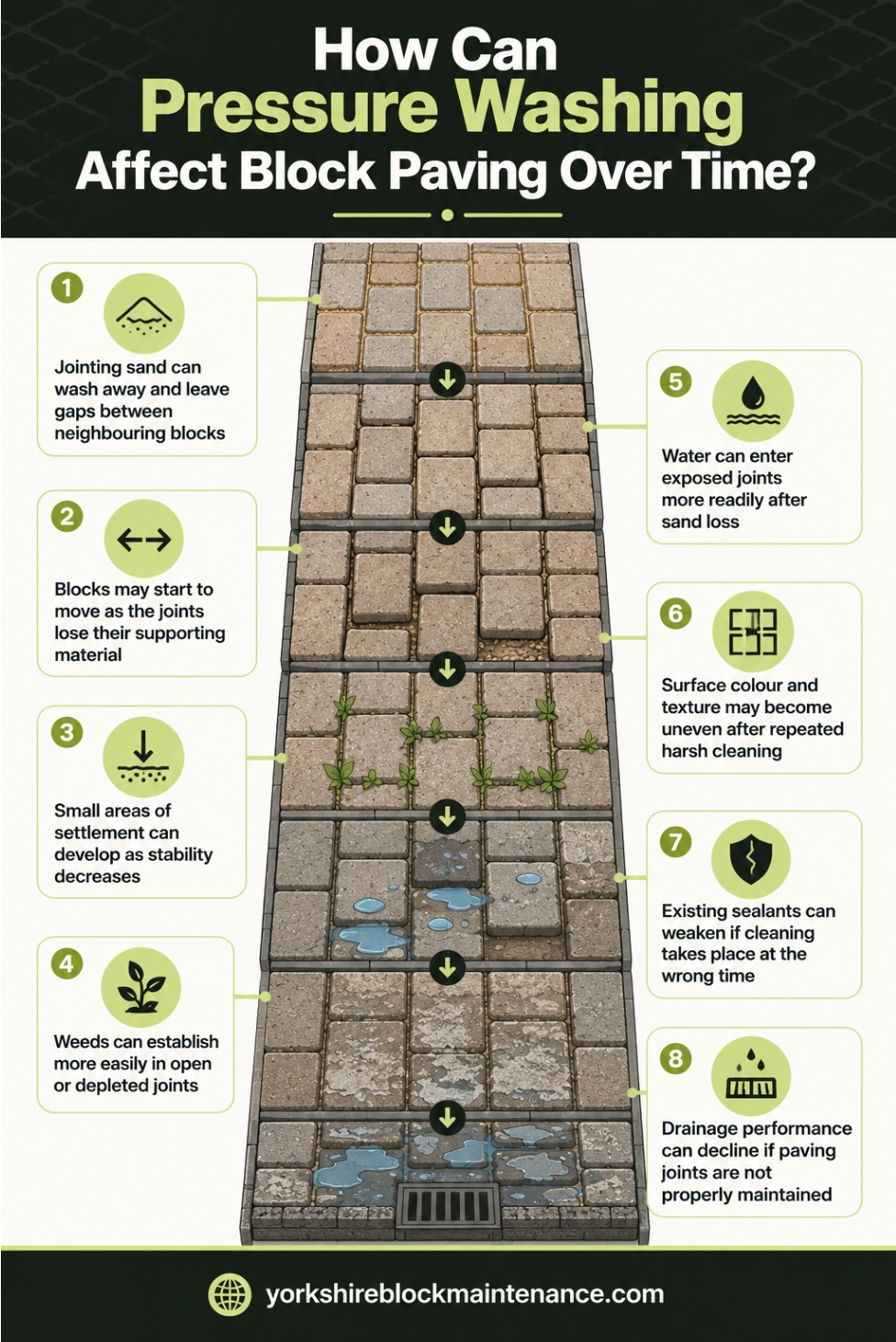
In many cases, damage appears gradually rather than straight away. Loss of jointing sand, reduced block stability, and increased movement can all affect the long-term performance of the paving.
The extent of the risk depends largely on the cleaning method used.
When Pressure Washing Is Safe
Block paving can usually be cleaned safely when it is in good condition. The condition of the joints is particularly important. Surfaces with well-filled joints tend to cope better with cleaning than those that have already lost sand.
A more controlled cleaning method involves:
- Fan nozzle operation
- Rotary surface cleaning
- Even pressure distribution
- Reduced focus on individual joints
This reduces the risk of disturbing the joints. The lance should be kept at a sensible distance from the surface. It should also be held at an angle rather than pointed directly into the joints.
These steps help remove dirt and organic growth without placing unnecessary stress on the paving.
How Incorrect Pressure Washing Can Cause Damage
Pressure washers can remove far more than dirt and surface staining.
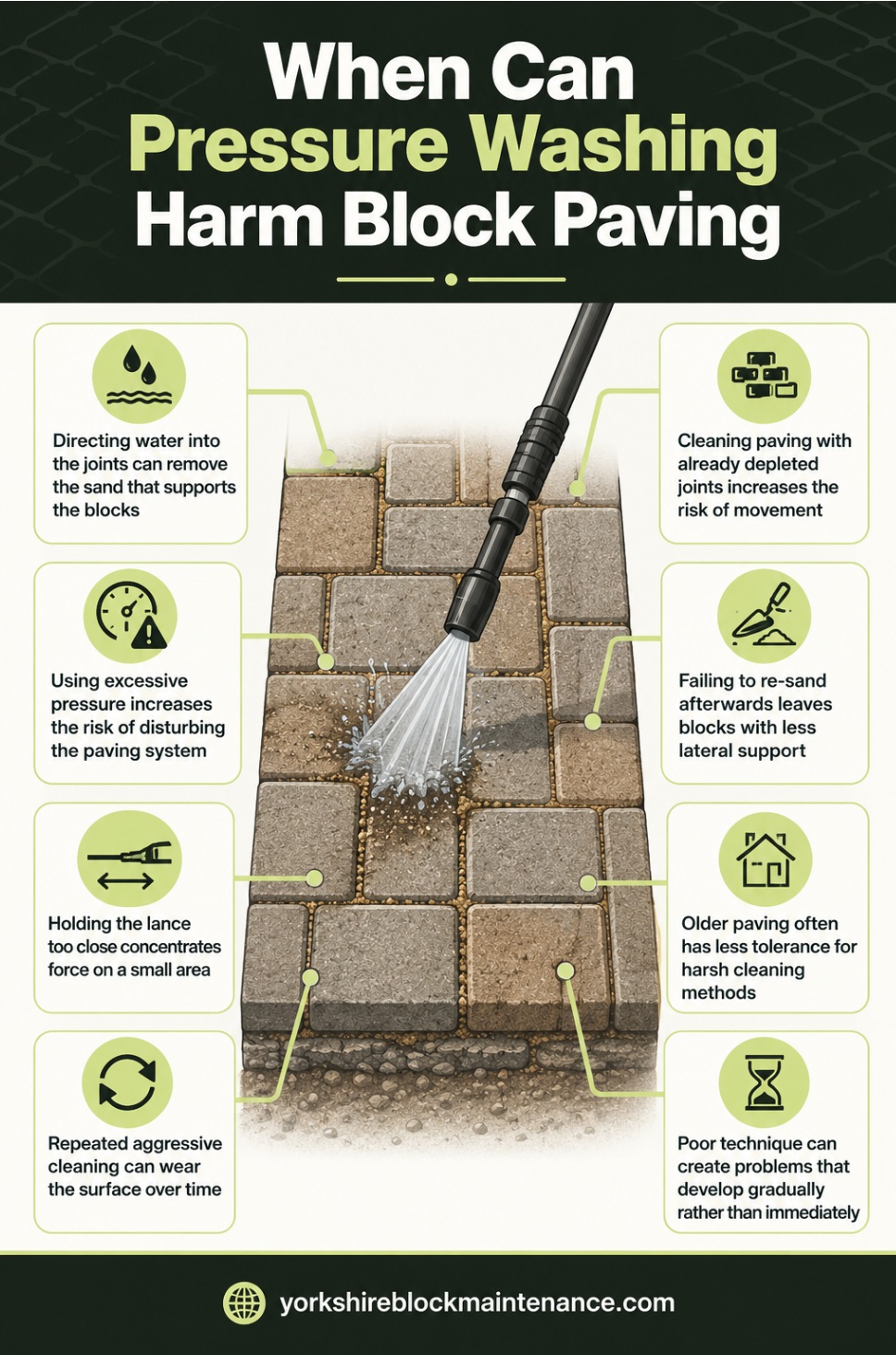
The force of the water can disturb the material that helps keep the paving system stable. The risk increases as pressure levels rise or the distance to the surface decreases.
Joint sand is most likely to be lost when:
- Water is directed into the joints
- Pressure is concentrated in one area
- The lance is held too close to the surface
- Cleaning is carried out too aggressively
As sand is removed, the blocks receive less support from the surrounding joints. Over time, this can contribute to movement, unevenness, and a shorter service life for the paving.
What Damage Can Pressure Washing Cause
Pressure washing does not destroy block paving in a single session.
Damage often develops through:
- Excessive water pressure
- Poor cleaning technique
- Frequent pressure washing
- Failure to replace lost jointing sand
The effects are often gradual. Joint integrity, surface condition, and paving stability can all decline before visible cracking appears.
The following issues are among the common forms of damage linked to aggressive or poorly carried out pressure washing:
Removing Jointing Sand Between Blocks
High pressure directed into joints displaces sand that holds neighbouring blocks in position. Industry guidance states that pressure cleaning removes the top layer of jointing sand in the vast majority of cases. Once that layer goes, the joints are open to weed growth and water infiltration at the wrong points.
Loose or Uneven Block Paving
Sand washout removes the lateral restraint that keeps blocks from moving under load. Without it, foot traffic and vehicle weight cause individual blocks to rock, tip, or settle at different levels over time.
Surface Wear and Loss of Finish
Repeated high-pressure cleaning wears the surface texture of blocks gradually. Older areas lose colour and finish unevenly. Sections that have been cleaned more frequently look faded or scoured compared to less-cleaned areas nearby.
Damage to Existing Sealants
A sealant that has not fully cured can be stripped or weakened by pressure washing. Interpave recommends waiting at least two weeks between cleaning and applying any new sealer. Joints should be re-sanded and fully dry before sealing begins.
Here is a quick overview of the common damage types, their causes, and how to prevent them:
| Potential Issue | Cause | Prevention |
|---|---|---|
| Jointing sand loss | High pressure or close contact | Use a lower setting and re-sand after drying |
| Loose blocks | Sand washout and movement | Refill joints and compact correctly |
| Surface wear | Repeated harsh cleaning | Use controlled passes and the right nozzle |
| Sealant damage | Cleaning too soon after sealing | Follow the correct drying and sealing gap |
Why Does Block Paving Need Jointing Sand
Jointing sand is a key part of a block paving system. While it fills the gaps between the blocks, its role goes far beyond appearance. It helps the paving remain stable under daily use and supports the long-term performance of the surface.
The following points show why jointing sand is so important:
How Jointing Sand Helps Keep Blocks Stable
Jointing sand fills the spaces between neighbouring blocks and helps hold them firmly in position. This interlock allows loads to be shared across the surface rather than concentrated on individual blocks.
A well-sanded pavement is therefore less likely to develop movement or uneven areas.
What Happens When Sand Is Washed Away
The loss of jointing sand weakens the connection between blocks. As the joints open up, blocks can begin to move independently and the surface may become less stable. Gaps also create favourable conditions for weed growth. For permeable block paving, maintained joints are particularly important.
GOV.UK guidance notes that permeable paving systems rely on their joints to continue functioning effectively as part of the drainage system.
What Is the Best Way to Clean Block Paving
The goal is to remove dirt, moss, and organic growth without disturbing joint material or stressing the block surface. Controlled technique achieves that without creating the reinstatement problems that poor cleaning causes.
The safest approach to cleaning block paving comes down to two key factors:
Choosing the Correct Pressure Setting
Lower, controlled pressure removes surface contamination without driving water deep into joints at high velocity. Research on permeable pavement maintenance found that cleaning equipment was only effective within roughly 3mm of the surface in some cases. Maximum power adds risk without delivering proportionally better results.
Using the Right Cleaning Technique
A fan nozzle held at a consistent angle and distance covers the surface without concentrating pressure on any single point. Moving in steady overlapping passes rather than dwelling on one area reduces the chance of sand displacement.
Our pressure washing service covers block paving cleaning with the correct equipment and reinstatement included as standard.
When Professional Cleaning May Be the Better Option
Some block paving surfaces need more care than a standard DIY clean can provide. Extra care is often needed on:
- Older block paving installations
- Large driveway surfaces
- Areas with worn or depleted joints
- Paving with an uncertain maintenance history
Jointing sand levels are not always visible from the surface. Where support has already been lost, cleaning can increase the risk of movement and instability.
In these situations, a professional assessment can help identify the safest cleaning method. If your paving needs specialist attention, our block paving and exterior cleaning service can help restore the surface while protecting the joints and overall condition of the paving.
Maintaining healthy joints also supports drainage performance. The Met Office has highlighted the increasing risk of intense rainfall and surface water flooding across the UK.
For permeable block paving in particular, well-maintained joints play an important role in helping water drain through the surface as intended.
FAQs
Can a Pressure Washer Remove Jointing Sand?
Yes, particularly when pressure is too high or the nozzle is held too close. Industry guidance confirms that pressure cleaning removes the top layer of jointing sand in the vast majority of cases.
What Pressure Is Safe for Block Paving?
Low to moderate pressure with controlled movement is the safest approach. Machine output, nozzle type, and distance from the surface all affect the result, so there is no single universal figure.
Do You Need to Re-Sand Block Paving After Pressure Washing?
Yes, in the vast majority of cases. Re-sanding restores joint stability and reduces the conditions that allow weeds to establish between blocks.
Can Pressure Washing Cause Block Paving to Sink?
Yes, indirectly. Sustained sand loss removes the support that keeps blocks level. Uneven settlement follows as blocks shift under load over time.
Is It Worth Sealing Block Paving After Cleaning?
Yes, but only once the paving is fully dry and joints have been properly topped up. At least two weeks should pass between cleaning and applying any sealer.
Conclusion
Pressure washing is not the problem. Poor technique and skipping re-sanding afterward are what cause lasting damage. Done correctly, block paving can be cleaned safely and kept in good condition for years. Need your block paving cleaned the right way?
Contact us today for a free quote.