
 Communal Cleaning
  Exterior Cleaning
  Building Maintenance
  Specialist Services

A planned property maintenance programme helps care homes identify risks early, keep essential systems working, maintain clear records and stay prepared for both scheduled and unannounced CQC inspections.
Care home property maintenance helps keep residents safe and buildings suitable for daily care. It covers more than repairs, with heating, fire safety, water, electrical systems and accessibility equipment needing regular attention. Good maintenance also provides evidence that essential checks and repairs are being managed properly. While it cannot guarantee a positive CQC rating, it supports a safe, well-managed environment. This benefits both residents and staff.
Key Takeaways
- Regular maintenance helps identify building and equipment problems before they create risks for residents or staff.
- CQC Regulation 15 requires care home premises and equipment to be clean, secure, suitable and properly maintained.
- Planned maintenance with clear records can provide useful evidence of effective management during CQC inspections.
Why Property Maintenance Matters for CQC Inspections
The condition of a care home can have a direct effect on resident safety and the quality of everyday care. A damaged floor can create a fall risk, while faulty heating, poor lighting or unreliable equipment can make routine care more difficult.
This makes maintenance part of the wider responsibility to provide a safe and suitable environment. CQC Regulation 15 requires premises and equipment to be clean, secure, suitable for their purpose and properly maintained, with providers expected to manage identified risks appropriately.
There is also a wider reason for getting maintenance right. The House of Commons Library’s population analysis shows that the number of older people in the UK is continuing to increase, with the population aged 85 and over projected to grow substantially over the coming decades. Research on the UK’s changing population helps explain why existing care facilities will need to remain suitable as demand for regulated care increases.
How Property Maintenance Supports the CQC’s Assessment Framework
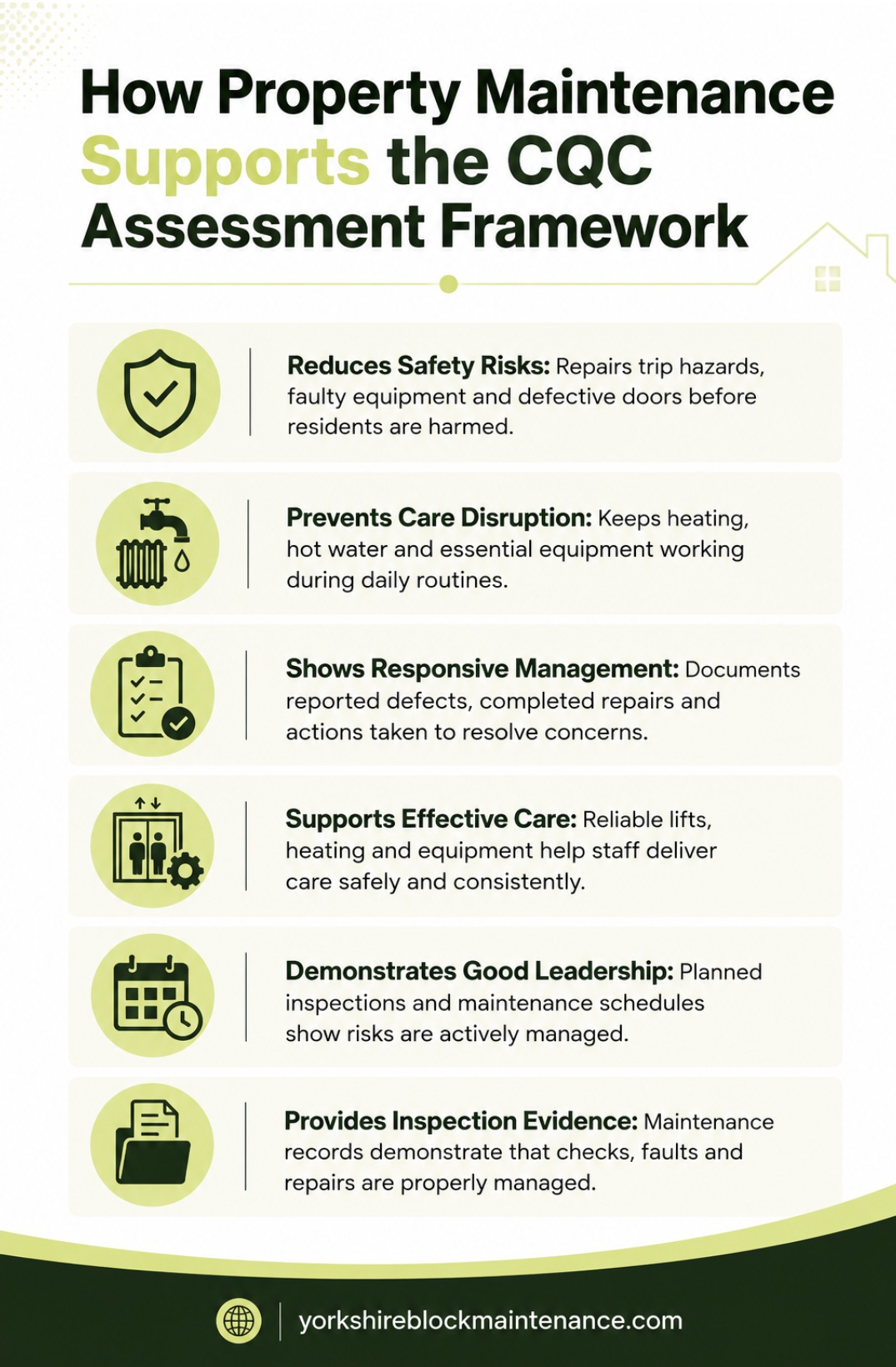
Property maintenance does not sit within one part of CQC’s assessment framework. The condition of the building and equipment can support several areas of care quality, from keeping residents safe to showing that managers respond properly to problems.
Safe
Maintenance has an obvious connection with safe care. Regular checks can identify hazards such as damaged flooring, faulty electrical equipment, defective doors or unsafe mobility equipment before they cause an incident.
CQC Regulation 15 is particularly relevant because it covers the condition, suitability and maintenance of premises and equipment. Its guidance also expects providers to carry out appropriate health and safety risk assessments and act on issues that are identified.
Effective
Care cannot run effectively when essential systems or equipment are repeatedly failing. Staff may struggle to move residents safely if a lift is out of service, while unreliable heating or hot water can disrupt normal routines.
Planned servicing helps reduce these avoidable interruptions. It also gives managers a clearer picture of which equipment needs attention and when replacement may be more sensible than repeated repairs.
Caring
A comfortable environment supports resident dignity as well as practical care. Reliable heating, hot water, clean communal spaces and well maintained facilities all contribute to a home that feels suitable for daily living.
Maintenance problems can become particularly noticeable when residents depend on the building and its services throughout the day. Resolving these issues promptly can therefore support both comfort and wellbeing.
Responsive
Responsive maintenance is about what happens after a problem is reported. Residents, relatives or staff may identify issues before they become serious, so the care home needs a clear process for recording, assessing and resolving them.
A useful system should show when the problem was reported, what action was taken and whether the repair was completed. That creates a clearer link between concerns raised and the response that followed.
Well Led
A planned maintenance programme can also demonstrate good management. Scheduled inspections, named responsibilities and properly stored records show that building risks are being managed rather than simply dealt with when something fails.
This is especially useful when a manager needs to demonstrate what has been checked, what remains outstanding and what action has been taken. Good records turn maintenance from an informal task into an auditable management process.
What Property Maintenance Does the CQC Expect Care Homes to Manage?
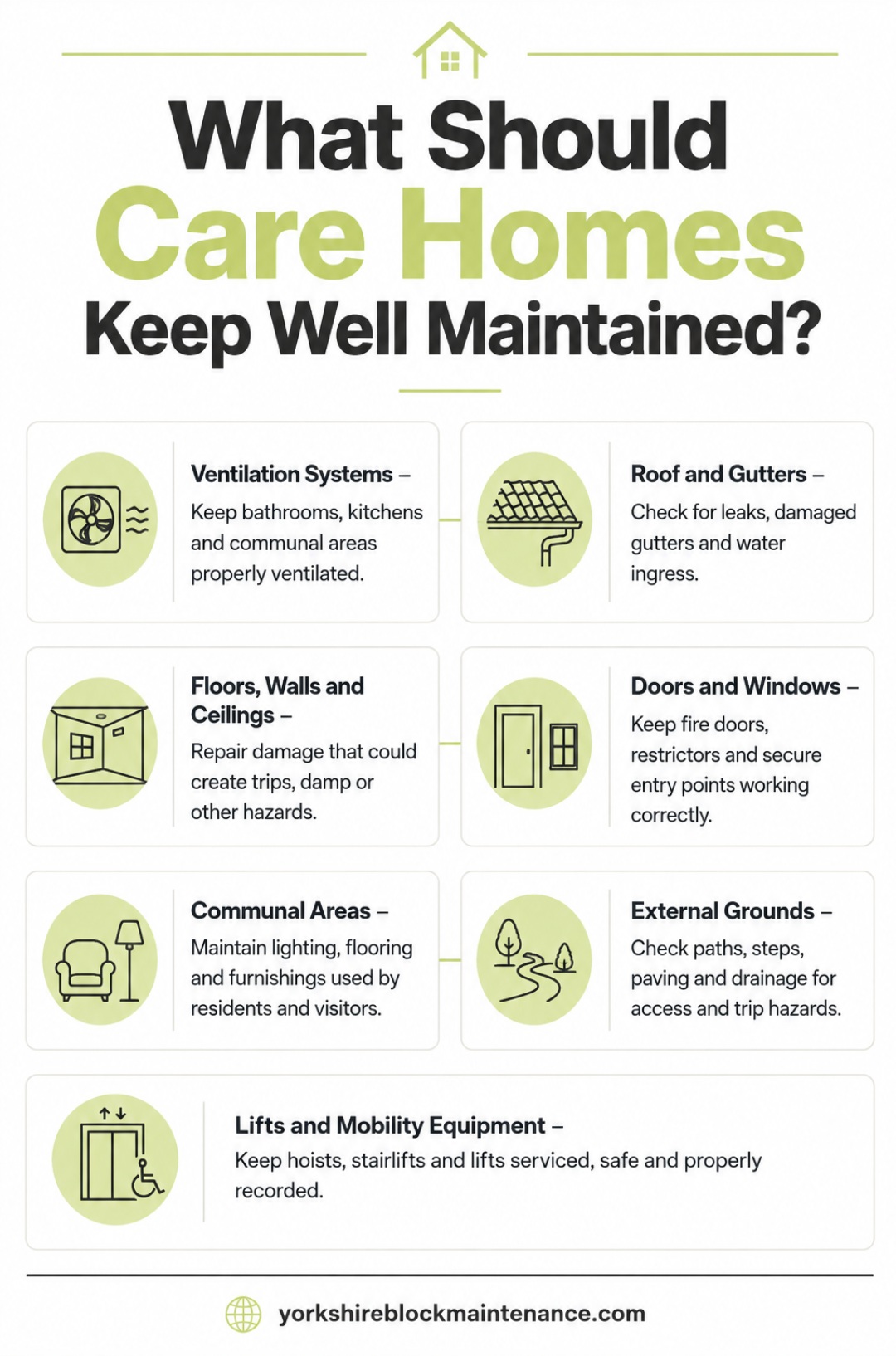
A care home needs to maintain a wide range of systems and physical areas, because problems in one part of the building can quickly affect safety elsewhere. The right schedule should reflect the home’s equipment, resident needs, risk assessments and statutory duties.
Fire Safety Systems
Fire safety systems need more than an occasional visual check. Fire alarms, detection equipment, fire doors, escape routes and compartmentation all need suitable inspection and maintenance so they can perform when required.
This is particularly important in residential care because some residents may need assistance to evacuate. The GOV.UK fire safety risk assessment guidance for residential care premises is specifically written for care homes and care homes with nursing. Which makes it a useful reference when reviewing maintenance arrangements.
Emergency Lighting
Emergency lighting supports safe movement and evacuation when the normal lighting supply fails. This is especially important in sleeping accommodation and areas used by residents who may have limited mobility.
Testing and maintenance should therefore be scheduled and recorded rather than treated as a one off task. Any identified fault should be followed through to repair and verification.
Electrical Installations
Electrical faults can create fire, shock and equipment risks, so installations need appropriate inspection and testing. The care home should also have a clear process for dealing with faults once they are found.
Electrical testing records should be kept with other compliance documentation. This makes it easier to demonstrate what was inspected, when problems were identified and whether remedial work was completed.
Heating and Hot Water
Heating and hot water are basic requirements for a safe and comfortable care environment. They also support hygiene and everyday care routines, so failures can have wider effects than simply making a room uncomfortable.
Maintenance should include routine servicing and checks, with faults dealt with promptly. This is particularly important in colder periods or where residents are more vulnerable to changes in temperature.
Plumbing and Water Hygiene
Water systems need careful maintenance because poorly controlled temperatures and stagnant outlets can increase legionella risk. Care homes therefore need a documented approach to assessing and managing their hot and cold water systems.
The HSE states that hot water should generally be stored above 60°C and distributed above 50°C, while cold water should remain below 20°C where temperature control is being used for legionella management. Infrequently used outlets should be flushed at least weekly, while showerheads and hoses should be cleaned and descaled at least quarterly.
Ventilation and Indoor Air Quality
Ventilation affects moisture, odours and indoor air quality. This becomes particularly important in bathrooms, kitchens and communal areas where moisture and occupancy levels can be higher.
Poor ventilation can also contribute to condensation and damp, which can damage the building as well as create an uncomfortable environment. Regular checks should therefore consider whether ventilation systems are working properly and whether rooms remain adequately ventilated.
Roofing and Building Fabric
The roof and external building fabric protect everything inside the care home. Leaks, damaged gutters, defective walls or deteriorating external finishes can allow water to enter and create more serious problems over time.
Routine inspections can identify these defects before they spread. Early repairs can also prevent a small building problem from becoming a larger structural or internal maintenance issue.
Flooring, Walls and Ceilings
Damaged flooring can create an immediate trip risk, while damaged ceilings or walls may indicate damp or another underlying problem. These defects should be investigated rather than simply covered up.
Regular visual checks can help staff identify deterioration early. Repairs should then be recorded so managers can see whether the issue has been resolved or needs further investigation.
Doors, Windows and Security
Doors and windows have several functions within a care home. They can affect fire safety, security, ventilation, accessibility and resident wellbeing.
Fire doors need to remain effective, while window restrictors and secure entry points may be important for resident safety. Maintenance checks should therefore look at both the physical condition and the purpose of the fitting.
Communal Areas
Communal areas are used frequently by residents, staff and visitors, so defects can affect many people at once. Lighting, flooring, doors, furniture and general condition all contribute to whether the space remains safe and comfortable.
These areas also form part of the resident experience. Keeping them clean, functional and well maintained can support both daily wellbeing and the wider impression of how the home is managed.
External Grounds and Car Parks
External paths, steps and parking areas need regular checks because uneven surfaces, broken paving and poor drainage can create access and trip hazards. These problems may affect residents as well as visitors and staff.
Seasonal changes can make some defects worse, so external maintenance should not be treated as a once a year exercise. Problems should be recorded and repaired before they become more difficult to manage.
Accessibility Equipment and Lifts
Hoists, stairlifts and passenger lifts are often essential to resident mobility and safe care. If this equipment fails or is not maintained properly, the consequences can extend beyond inconvenience.
CQC guidance places responsibility on providers to ensure equipment remains suitable and properly maintained, even where servicing is carried out by an external contractor. This is one reason why maintenance records and service reports should be kept together and reviewed regularly.
For a broader approach to statutory property checks, managed property safety checks and compliance can cover areas such as gas safety, electrical testing, smoke alarms and legionella risk assessment reviews.
Planned Preventative Maintenance vs Reactive Maintenance for Care Homes
Planned preventative maintenance aims to identify predictable faults before they affect residents or interrupt care. It uses scheduled inspections, testing and servicing based on the condition of the building, equipment and systems.
Reactive maintenance is still necessary because unexpected faults will always happen. The difference is that a care home relying heavily on reactive repairs is more likely to experience avoidable disruption, while a planned approach gives managers more control over risks, records and budgets.
| Planned Preventative Maintenance | Reactive Maintenance |
|---|---|
| Finds predictable faults earlier | Responds after a fault occurs |
| Reduces avoidable disruption | Can interrupt daily care |
| Creates scheduled records | Creates repair records |
| Improves cost planning | Costs can be harder to predict |
| Supports inspection readiness | Deals with unexpected problems |
There is also a wider cost argument for dealing with building defects early.
BRE’s research into poor housing found that improving England’s poorest housing stock could deliver £135.5 billion in societal benefits over 30 years (with falls and excess cold among the major hazard categories considered). While the research covers general housing rather than care homes, these same physical hazards are relevant when prioritising maintenance in residential care settings.
A good care home should therefore combine planned maintenance with a clear reactive process. Routine work reduces predictable risks, while responsive repairs deal with faults that could not reasonably have been prevented.
How Often Should a Care Home Be Maintained?
A maintenance programme works best when tasks are organised into clear intervals. The exact schedule should reflect the building, equipment, risk assessments, manufacturer’s instructions and any statutory servicing duties.
| Frequency | Typical Tasks |
|---|---|
| Daily | Check for obvious hazards, damage and urgent defects |
| Weekly | Flush infrequently used water outlets and review reported faults |
| Monthly | Check key systems, equipment and water temperatures where required |
| Quarterly | Clean and descale showerheads and hoses |
| Annually | Complete required servicing and inspections for key systems and equipment |
These are useful planning intervals rather than a universal schedule for every care home. Water hygiene tasks in particular should follow the site’s risk assessment and the relevant HSE requirements. While equipment should also be serviced according to manufacturer instructions.
What to Look for in a Care Home Maintenance Provider
When choosing a care home maintenance provider, look for a company that can demonstrate:
- Regulated Care Experience: Understands the specific demands of working in care environments.
- Planned Maintenance: Organises preventative work through clear, structured maintenance schedules.
- Fast Response: Provides realistic response times when faults affect residents or essential services.
- Clear Documentation: Maintains accurate records of inspections, servicing and completed repairs.
- Compliance Focus: Understands the importance of documented compliance and keeping essential systems properly maintained.
It is also useful to check whether the provider can coordinate several trades and maintain multiple properties if required. A single, consistent system for work orders, reports and follow up actions can make ongoing property management easier and reduce the administrative burden on care home staff.
FAQs
What maintenance records should a care home keep?
Keep records of inspections, testing, servicing, repairs and follow up actions for relevant buildings, systems and equipment.
How often should care homes inspect their buildings?
The frequency should reflect the building, equipment, risk assessments, manufacturer requirements and statutory duties.
How often should emergency lighting be tested?
Emergency lighting should follow the home’s documented testing and maintenance schedule, with faults recorded and repaired promptly.
How often should fire alarms be tested?
Fire alarm testing should follow the system requirements and the home’s fire safety arrangements, with servicing properly documented.
What are the most common maintenance issues identified during CQC inspections?
Unsafe equipment, damaged surfaces, fire safety defects and poorly maintained essential systems can all create concerns.
What should be checked before an unannounced CQC inspection?
Review outstanding repairs, essential system checks, equipment servicing and maintenance records so unresolved issues are identified quickly.
Conclusion
Planned property maintenance helps care homes identify hazards early, keep essential systems working and document completed checks and repairs. Regular servicing supports safer environments for residents and staff. While it cannot guarantee a CQC rating, proactive maintenance can reduce avoidable risks and help keep homes ready for inspection.
Get a quote for property maintenance support tailored to your care home’s needs.